
"coffee sunlight"
5000 article(s) found

How should the coffee be preserved? How to preserve coffee beans
Professional coffee knowledge exchange more coffee bean information please follow the coffee workshop (Wechat official account cafe_style) within a month: the general bean bag can be filled, every time after drinking must check the seal is not exactly closed, and placed in a cool place, to avoid direct sunlight affecting the deterioration of coffee beans. More than one month, but not more than two months: sealed box or can, non-transparent

Coffee tree growing environment and species introduction
The environmental conditions suitable for the growth of Arabica coffee trees are that the annual temperature changes between 15 and 25; the annual rainfall is between 1500 and 2000 mm, and it must be able to match the flowering period of coffee trees. In addition, the growth of coffee trees for soil requirements are also very high, if the soil is not fertile enough, containing nutrients, including a variety of trace elements are not enough, it may affect

What is Brazilian pectin sun-cured coffee? What is the difference between pectin sun-cured coffee and ordinary sun-cured coffee beans?
Professional coffee knowledge exchange more coffee bean information please follow the coffee workshop (Wechat official account cafe_style) Brazilian coffee pectin sun drying coffee beans lift the sun, the most widely used is Brazilian coffee; the disadvantage of the sun method is easy to mix defective beans, bean and bean appearance poor dry treatment (secado), also known as natural full-time drying (natural). The method of tanning is

Temperature between 15 and 25 ℃. Climate. Recent coffee planting temperature.
The optimal planting conditions of conditional coffee trees are as follows: the temperature is between 15 and 25 ℃, and the annual rainfall of coffee trees must reach 1500 to 2000 mm, and the rainfall time should be in line with the flowering cycle of coffee trees. Of course, in addition to the seasonal rainfall, there should also be fertile soil and good drainage. Fertile soil containing volcanic ash

Introduction of Flavor Flavor Coffee Bean Manor in Antigua Coffee Variety producing area of Guatemala
Antigua is the oldest and most beautiful city in America. As early as 1543, Antigua was the capital of all colonial times in Central America, and the Government House of Spain was also set up here. After the great earthquake of 1773, the volcano destroyed the once-prosperous capital in an instant, robbing it of all its prosperity and beauty overnight. The whole city of Antigua was destroyed, so the capital was moved to

Cultivation techniques of Coffee History of Botany Coffee roasting
The cultivation technology editor requires that the origin of coffee tree [4] is in Ethiopia in Africa. In botany, coffee trees belong to the evergreen trees of the subgenus Rubiaceae, and coffee beans, commonly known as coffee beans, are actually the seeds of the fruit of coffee trees. They are called coffee beans only because they are shaped like beans. Climate is the decisive factor for coffee cultivation. Coffee trees are only suitable for growing in the tropics or

Where is the coffee tree suitable for production and what weather conditions do you need?
The planting conditions of coffee trees, however, not all the land located in this area can produce good coffee trees. The ideal planting conditions of coffee trees are as follows: the temperature is between 15 ℃ and 25 ℃, and the annual rainfall must reach 1500 mm to 2000 mm. At the same time, the rainfall time should be in line with the flowering cycle of coffee trees. Of course, except for the matching of seasons and rainfall
Can I plant coffee trees at home?
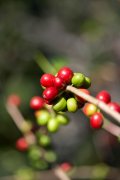
The origin of the coffee tree is Ethiopia in Africa. In botany, coffee trees belong to the evergreen trees of the subgenus Rubiaceae, and coffee beans, commonly known as coffee beans, are the seeds of the fruit of coffee trees, just because they are shaped like beans, so they are called coffee beans. Climate is the decisive factor for coffee cultivation. Coffee trees are only suitable for growing in the tropics or subtropics, so latitude 2.

Brazil Morgiana Queen Manor Sunlight COE Fine Coffee Bean Hand Brewing Parameters Suggestions
Professional barista exchanges, please pay attention to the coffee workshop (Weixin Official Accounts cafe_style ) hand-washed Brazilian Queen Manor. 15g powder, medium grinding (small Fuji ghost tooth knife 4 grinding), v60 filter cup, 88-89 degrees water temperature, the first injection of 30g water volume, 27 seconds of stewing, injection to 105g water volume cut off water, wait for the powder bed water volume to drop to half, then slowly inject water until 225g water volume, tail

Introduction to Antigua Coffee in Guatemala Coffee Manor
Antigua is a famous producer of coffee. Rich volcanic soil, low humidity, strong sunlight and cool night breeze are the characteristics of Antigua. Three spectacular active volcanoes ── Agua, Acatenango and Fuego form a beautiful valley. Fuego active volcano also adds misty dust from time to time. Every 30 years or so, Antioch
An introduction to the common sense of coffee trees
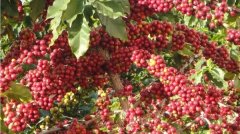
The origin of the coffee tree is Ethiopia in Africa.

Production conditions of Coffee trees Muskcat Arabica
1. Planting conditions of coffee trees the ideal planting conditions of coffee trees are as follows: the temperature climate is between 15-25 ℃, and the annual rainfall must reach 1500-2000 mm, and the rainfall time should be in line with the flowering cycle of coffee trees. Of course, in addition to the seasonal rainfall, there should also be fertile soil and good drainage. Fertile soil containing volcanic ash

The generating environment of coffee trees
In botany, coffee trees belong to the evergreen trees of the subgenus Rubiaceae, and coffee beans, commonly known as coffee beans, are actually the seeds of the fruit of coffee trees, just because they are shaped like beans.

Coffee beans in the highlands of southern and western Ethiopia
Growing in the western highlands of southern Ethiopia (the border of Shewa and Sidmo provinces), east of Jima, north of Sidamo, most Europeans and Americans prefer 3600-6200 feet above sea level, most of them are washed with water, their annual output is about 110000bags/60kg, most of the beans are round (15/16scr), the color is green and bluish, the export is mostly G2 grade, the taste is similar to Yegashev, but the viscosity is simple.

Introduction to the planting Environment of Coffee beans in the Dome Manor of Guatemala
Guatemala Dome Manor Guatemala, a total of seven major coffee producing areas, each producing different coffee flavors, but to sum up, Guatemalan coffee shows a mild and mellow overall texture, elegant aroma, and with similar acidity and pleasant acidity, has become the aristocracy of coffee, of which Antigua coffee (AntiguaClassic) has won the whole.

Various coffee cultivation methods the flavor of Ethiopian coffee
The origin of the coffee tree is Ethiopia in Africa. In botany, coffee trees belong to the evergreen trees of the subgenus Rubiaceae, and coffee beans, commonly known as coffee beans, are the seeds of the fruit of coffee trees, just because they are shaped like beans, so they are called coffee beans. Climate is the decisive factor for coffee cultivation. Coffee trees are only suitable for growing in the tropics or subtropics, so latitude 25 is south and north.

The treatment of Panamanian Candle Coffee beans, one of the most popular and delicious beans.
The treatment of Panamanian candle coffee beans, one of the most popular and delicious beans, is mostly washed by water, while a small number of out-of-grade beans are deliberately treated in the sun, which is also one of the oldest treatment methods. Yega Xuefei sold in the quality museum is treated in the sun. Drima Zede (candlelight, the name of Yega Xuefei) is Best Approach in the local dialect.

Analysis of Coffee Solarization| How is the coffee processed and what flavor does it have?
Professional coffee knowledge exchange More coffee bean information Please pay attention to coffee workshop (Weixin Official Accounts cafe_style) Sunlight treatment method Sunlight treatment method Step 1 Coffee fruit harvest manual or mechanical harvest Step 2 Fruit sorting manual or flotation method Step 3 Sunlight directly on the ground drying or special drying site Step 4 When the coffee fruit reaches appropriate

Coffee tree common sense introduction
The coffee tree is native to Ethiopia in Africa. Coffee tree in botany, belongs to the Rubiaceae coffee subgenus evergreen tree, and generally known as coffee beans, in fact, coffee tree fruit seeds, only because of the shape like beans, so called coffee beans.

Species and cultivation techniques of Coffee trees
Arabica bean coffee tree can be divided into two main varieties: Arabica species (Coffea Arabica) and Robusta species (Coffea Robusta/Coffea Canephora). There are also some minor species, such as the Liberian species (Coffea Liberica) and the Alabasta species (Coffea Arabusta), but they are rare on the market.